
The Line of Retreat: Risk-Aversion Chicken Road 2 Game Psychology
Simple arcade-style casino games, exemplified by the **Chicken Road 2 **, strip betting down to its purest psychological form: the test of nerve. The core mechanic—advancing one step at a time, with each step increasing the potential reward but also the chance of total loss—is a profound exercise in **risk-aversion Chicken Road 2 Game** psychology. It constantly forces the player to weigh realized gains against potential, exponential profits, making the game a high-stakes study of human greed and fear.
The Sunk Cost Fallacy in Real-Time
As the player progresses along the "Chicken Road," the monetary value accumulated represents a sunk cost; it is already technically "won" but remains uncashed. The deeper the player goes, the more tempting it is to push forward, driven by the **risk-aversion Chicken Road 2 Game** fallacy. The player rationalizes: "I've risked this much already; I must continue to maximize the return." This emotional pull to protect the effort already invested often overrides rational decision-making, leading players to lose large potential payouts by failing to retreat at the optimal moment.
The Exponential Reward Curve
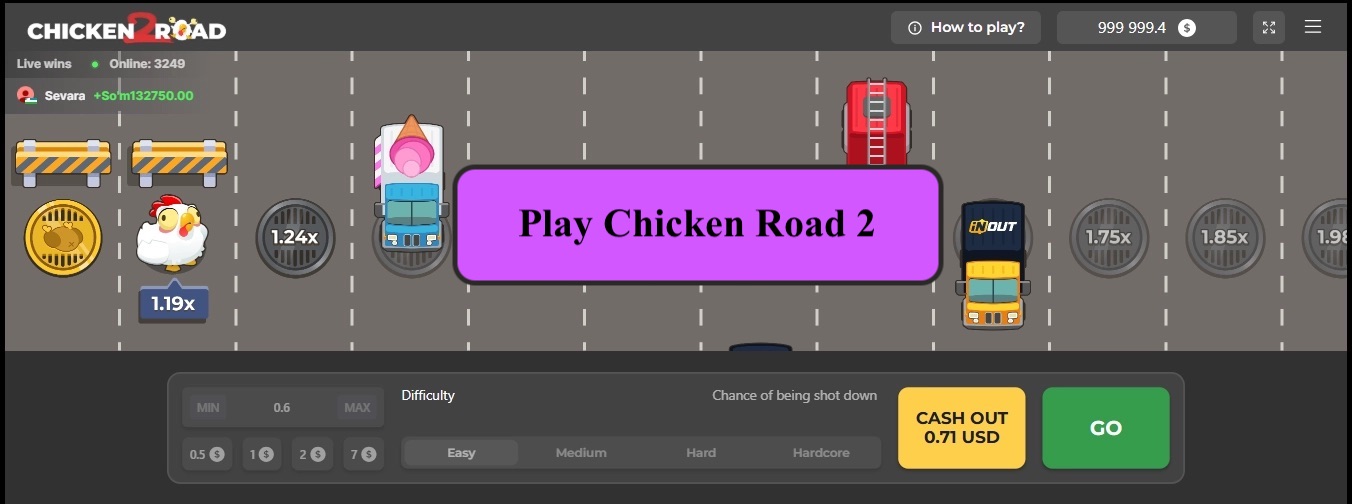
The **Chicken Road 2 Game** successfully manages tension through its exponential reward curve. The jump in winnings between level 1 and level 2 might be minor, but the jump between level 8 and level 9 is massive. This asymmetrical reward system pushes the player to hold for the truly life-changing prize, intensifying the **risk-aversion Chicken Road 2 Game** test. The player is not just facing a uniform probability; they are facing a situation where the next step is psychologically the most valuable, and therefore the hardest to back away from.
Furthermore, the element of choice in the **Chicken Road 2 Game**—where the player actively decides to "Chicken Out" or press on—gives the player perceived control over the outcome. When a loss occurs, it is framed not as bad luck, but as a failure of nerve or timing, compelling the player to re-enter and try to perfect their risk management strategy in the next round.